It is essential for every forex trader to understand how certain major events can significantly impact market movements. Some of these events can trigger fundamental shifts in a country’s macroeconomic landscape.
In this context, we highlight key factors that directly influence the prices of foreign currency pairs within the forex market.
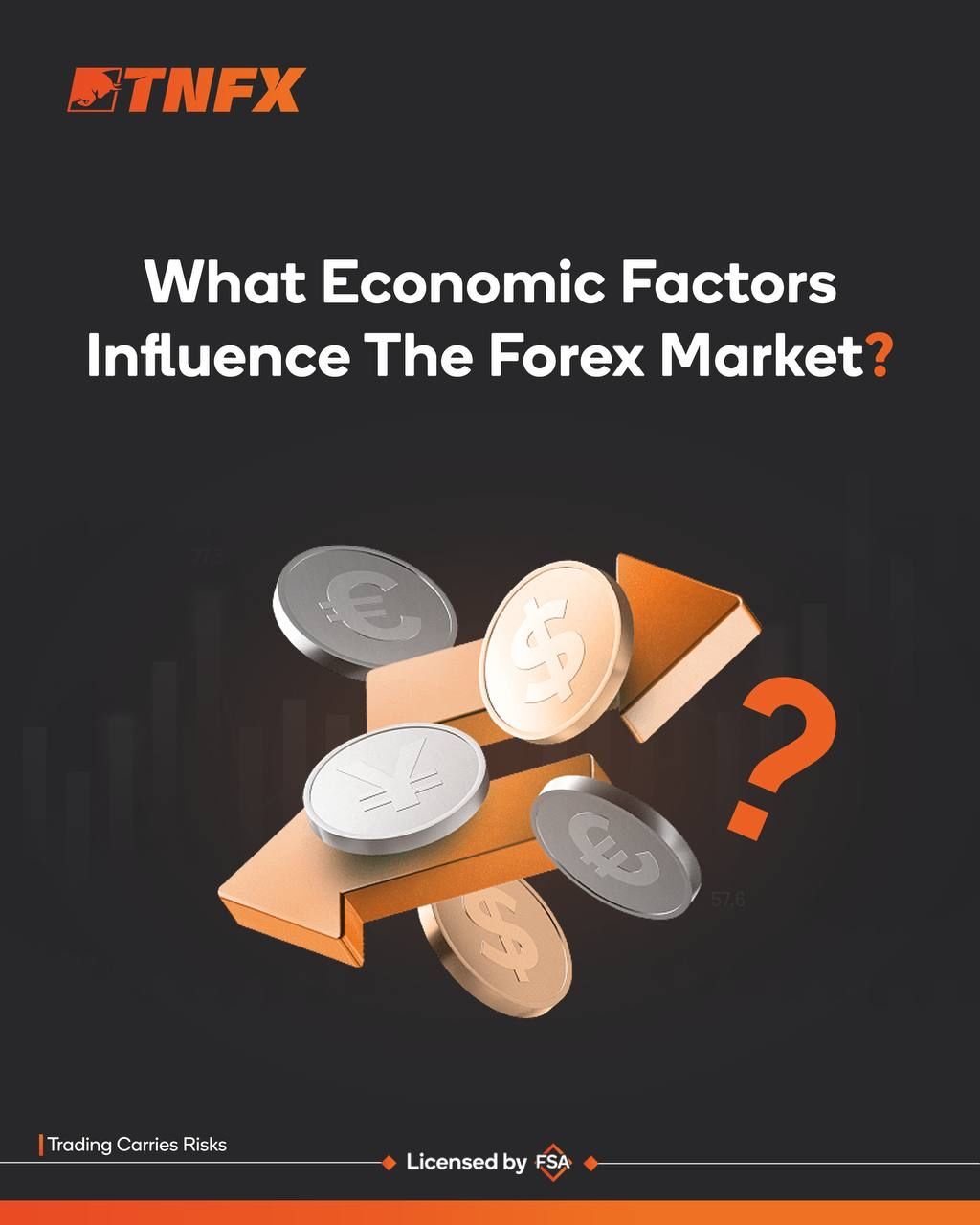
Economic Factors and Their Impact on Forex
The economic factors that affect the forex market are diverse and constantly evolving due to global changes. Given that forex is tightly linked to economic data, analyzing all relevant factors can be complex especially since most are revealed through official statistics and reports issued by governmental or global financial institutions.
These figures serve as direct indicators of a country’s overall economic health, and analysts consider them among the most critical drivers of market volatility whether in pricing, supply, or demand.
Despite the variety of influences, there are several common economic indicators that directly impact financial instruments within the forex market. In the following sections, we’ll examine the most important of these in detail.
- Labor Market Indicators
Labor market indicators play a pivotal role in shaping investor sentiment—both domestic and international. These metrics reflect the general economic condition and directly influence traders’ decisions in the forex market.
When a country shows improvement in its labor market data, it typically boosts investor confidence in that economy. As a result, the country becomes more attractive for investment and trading, encouraging greater participation in its forex market.
- Employment Rates
Employment rates are among the most influential economic indicators in forex trading. Higher employment rates generally signal a strong and stable economy, which positively affects the country’s performance in global markets.
Measurement methods for employment data vary across countries. For example, in the United States, employment figures are published monthly, while other countries might rely on the general unemployment rate as their key reference.
- Unemployment Rates
Unemployment rates are fundamental indicators that clearly impact the forex market. A rise in unemployment typically signals a decline in the local economy’s performance, leading to reduced confidence among investors and traders.
High unemployment is generally viewed as a negative sign, which weakens the local currency’s value and diminishes the country’s attractiveness for investment. This, in turn, can lead to decreased trading volumes in related forex markets. - Inflation Rates
Inflation is one of the most prominent indicators affecting currency value and the forex market. It measures changes in prices of goods and services at the consumer, producer, and retail levels. When prices of raw materials or goods rise, this directly impacts purchasing power and influences the exchange rate.
Key inflation-related indicators include: - Consumer Price Index (CPI)
- Producer Price Index (PPI)
- Retail Sales Index
Although high inflation generally has a negative long-term impact, central bank responses through monetary policies can sometimes produce a short-term positive effect, encouraging foreign investors to enter the market.
- General Economic Indicators
This category includes broad measures that assess the overall economic performance of a country, most notably: - Gross Domestic Product (GDP)
- Industrial Production
These indicators reflect the stability and strength of an economy. Weak readings often lead to reduced investor confidence and a decline in foreign investments, negatively impacting the forex market.
- Trade Balance
The trade balance compares the value of a country’s exports against its imports over a specific period.
When a country runs a trade surplus—meaning exports exceed imports—it tends to strengthen its currency by increasing demand, which attracts foreign investors and stimulates forex trading. - Housing and Construction Sector Indicators
Housing indicators are considered leading measures reflecting the growth of the local economy. When a country experiences a boom in the housing and construction sectors, it signals broad economic expansion that typically extends to related industries such as trade, transportation, construction, and marketing.
This positive growth encourages investors to enter the market, either through construction projects or by trading in the forex markets.
What Events Affect Forex Trading?
As previously noted, the forex market is influenced by a wide range of events and factors that cause noticeable fluctuations in foreign currency exchange rates.
Below, we explore the most significant events that directly impact market movements and trader sentiment:
- Elections and Political Events
Elections and political shifts play a critical role in moving financial markets—especially the forex market.
Markets closely watch election results because the victory of a particular party can signal new fiscal or economic policies. For instance, some parties are seen as fiscally conservative and likely to implement spending controls, which can strengthen the national currency. In contrast, other parties may lean toward increased government spending, raising concerns about inflation or national debt.
In general, any major political development—whether it’s an election, regime change, or even a high-impact political statement—can trigger market volatility and sudden changes in currency values.
This makes it essential for forex traders to closely monitor geopolitical events.
- Macroeconomic Data
Macroeconomic data is one of the most influential factors directly impacting currency movements in the forex market, as it reflects the overall performance of a country’s economy. These data points serve as reliable indicators for analyzing currency strength and forecasting future trends, and they can be easily tracked through economic calendars.
It’s crucial for traders to develop a solid understanding of this type of data, which includes the following:
- Interest Rates
Interest rates are among the most powerful indicators influencing currency exchange rates. When a country raises its interest rates, its currency becomes more attractive to foreign investors, which often leads to an appreciation against other currencies. - Inflation Rates
As mentioned earlier, inflation is a key metric that reflects the economic state of a country. The primary tools used to measure inflation include: - Consumer Price Index (CPI): Measures the average change in prices for consumer goods and services.
- Producer Price Index (PPI): Tracks the change in prices received by domestic producers for their goods.
Rising inflation may prompt central banks to intervene by adjusting interest rates, which can either strengthen or weaken the national currency depending on the broader economic context.
- Employment Rates
High employment rates generally indicate economic strength, and markets often react quickly to such data.
For instance, in the United States—the issuer of the world’s strongest currency—the employment report is released on the first Friday of every month. This report is considered one of the key short-term drivers of forex market movements. - Economic Sentiment Surveys
These surveys include indicators that reflect market expectations, such as: - Consumer Confidence Index (CCI): Reflects consumers’ expectations regarding future spending.
- Purchasing Managers’ Index (PMI): Gauges activity trends in the manufacturing and service sectors.
Most developed countries release these indicators monthly, and they are closely monitored to anticipate near-term investment and business activity. - Gross Domestic Product (GDP)
GDP represents the total market value of goods and services produced by a country within a specific period.
It is one of the most closely watched economic indicators because it provides a comprehensive snapshot of a nation’s economic health.
Reports on housing, employment, and inflation all contribute to forming a clearer picture of GDP growth.
In Conclusion
Understanding the economic and political factors that influence the forex market is essential for any trader aiming to make informed and successful decisions.
Markets do not move randomly; they respond to clear indicators such as interest rates, employment levels, GDP, political shifts, and other key data that reflect the pulse of the global economy.
Consistently monitoring and analyzing these indicators helps traders anticipate market trends and reduce potential risks.
Therefore, equipping oneself with economic knowledge and fundamental analysis is just as important as using technical tools when building an effective trading strategy.