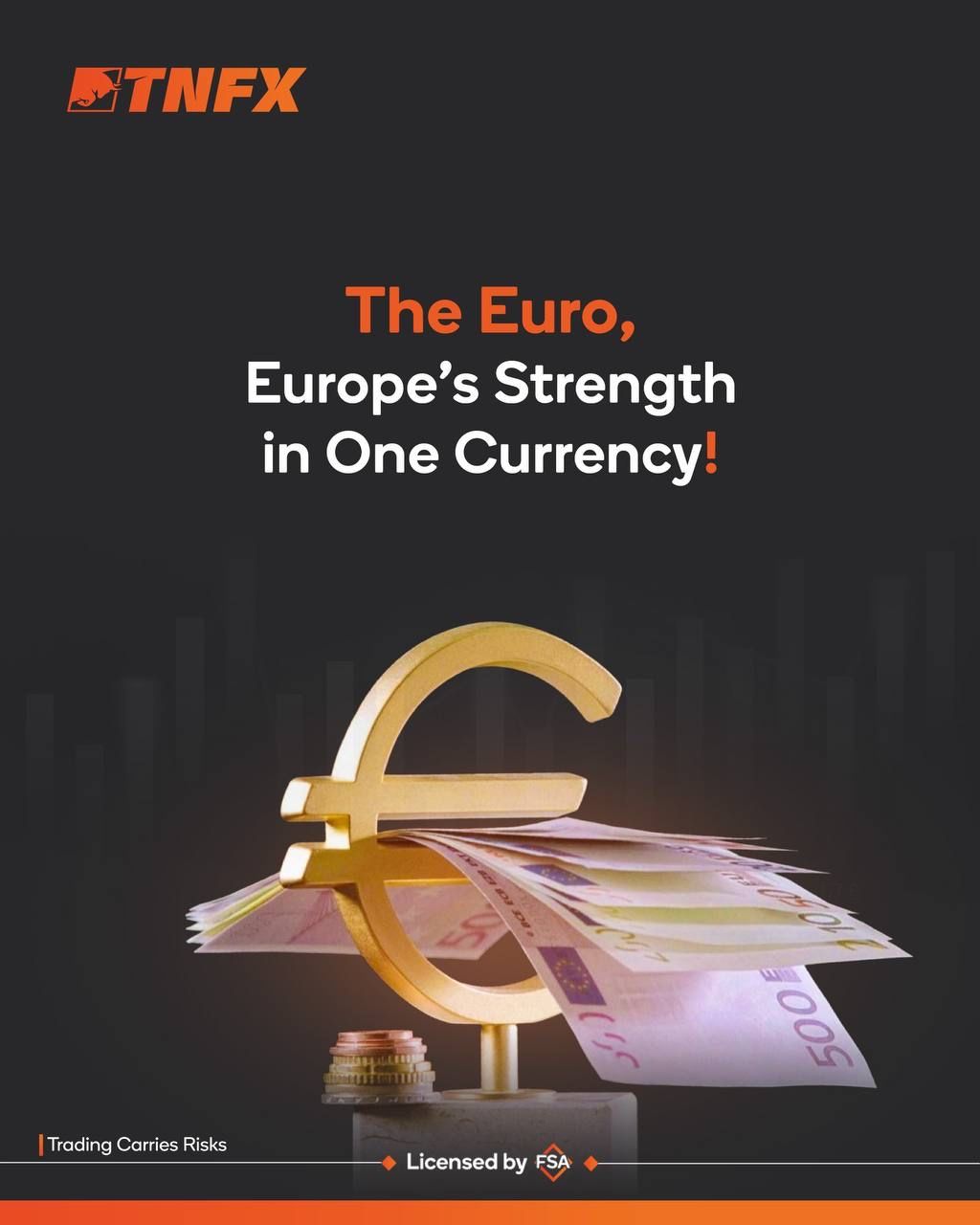
Today, the euro stands as a symbol of European unity, with 19 European Union countries adopting it as their official common currency. Since its debut on January 1, 1999, it has established itself as one of the world’s leading currencies, ranking second only to the US dollar in terms of trading volume and economic influence.
This article highlights the journey of the euro from its inception, its significance in both the European and global arenas, as well as the opportunities it has created and the challenges it faces today.
The Euro: From Concept to Economic Reality
- Before the euro, each European country used its own national currency, making trade and financial transactions across borders more complicated. With the signing of the Maastricht Treaty in 1992, concrete steps were taken toward creating a unified currency that would reflect the strength of Europe’s economic and monetary union.On January 1, 1999, the euro was launched as an electronic currency for financial and commercial transactions, before being introduced in banknotes and coins in 2002, becoming a tangible part of everyday life for Europeans.Today, the euro (symbol: €; ISO code: EUR) is the official currency in 20 out of the 27 EU member states, forming what is known as the Eurozone, home to over 343 million people according to 2019 statistics.Divided into 100 cents, the euro is the second most traded currency after the US dollar. Besides EU countries, it is also adopted by four small European states not part of the Union, as well as regions such as Akrotiri and Dhekelia under British jurisdiction, while countries like Montenegro and Kosovo use the euro unilaterally. Several territories outside Europe also peg their currencies to the euro, making it a globally influential currency used by over 200 million additional people worldwide.Economically, the euro is the second-largest reserve currency after the US dollar. By December 2019, the total value of euro banknotes and coins in circulation exceeded €1.3 trillion, placing it among the highest in terms of overall circulating currency value.Regarding its adoption milestones, the name “euro” was officially chosen at the Madrid European Council on December 16, 1995, and it was introduced as a unit of account in financial markets in January 1999, at a 1:1 rate with the European Currency Unit (ECU), equivalent to approximately $1.1743 USD. Physical euro banknotes and coins entered circulation in January 2002, and by March of the same year, national currencies were completely replaced.Although its initial value fell to $0.83 USD in 2000, the euro rebounded by late 2002 to surpass the dollar, reaching a peak of $1.60 USD in July 2008. The European debt crisis in late 2009 presented a significant challenge to the currency, prompting the establishment of the European Financial Stability Facility along with a series of reforms to ensure its stability and maintain its status as a symbol of Europe’s economic strength.Key Milestones in the History of the Euro
- 1970: Pierre Werner’s plan for a unified European currency is proposed.
- 1972: Establishment of the European Currency Cooperation.
- 1979: Launch of the European Monetary System.
- 1988: The European Commission adopts the Delors Report, recommending the implementation of a single currency.
- July 1, 1990: Phase One begins with the liberalization of capital movements among EU countries.
- January 1, 1994: Phase Two begins with the establishment of the European Monetary Institute.
- December 16, 1995: Official agreement on the new currency name: “Euro”.
- December 13, 1996: Signing of the Stability and Growth Pact to ensure the economic strength of member states.
- January 1, 1999: Launch of the euro as a banking currency and unit of account replacing national currencies.
- January 1, 2002: Euro banknotes and coins enter into official circulation.
- 2001: Greece joins the Eurozone.
- 2009: Euro adopted as the official currency in Slovakia.
- 2010: Greek debt crisis erupts, causing the euro to weaken against the US dollar.
- 2014: Latvia officially joins the Eurozone.
- Euro Management and Monetary PolicyThe euro is managed by the European Central Bank (ECB), headquartered in Frankfurt, in coordination with the network of national central banks of the Eurozone countries, collectively known as the Euro system. The ECB operates as a fully independent authority and is the sole institution responsible for the monetary policy of the region. Its key responsibilities include:
- Setting interest rates and guiding financial policies.
- Supervising the printing of banknotes and minting of coins.
- Organizing the distribution of currency among member states.
- Operating payment and transfer systems within the Eurozone.
- The Maastricht Treaty of 1992 laid down the foundational rules for adopting the euro, requiring most EU countries to transition to the currency upon meeting specific criteria related to monetary stability and budgetary discipline.However, not all EU members have adopted the euro:
- Denmark received an official opt-out under the treaty.
- Sweden chose not to adopt the euro following a non-binding referendum in 2003, despite joining the EU in 1995.
- Countries that joined the EU after 1993 committed to adopting the euro once they meet the necessary criteria.
- Later, the Treaty of Nice amended certain legal gaps in the Maastricht Treaty, strengthening the legislative framework for managing European monetary policy.
Issuing Euro Banknotes
Since January 1, 2002, the European Central Bank (ECB) and the national central banks have jointly issued euro banknotes. The system is based on integration and fair distribution among member states, as follows:
- Joint Issuance: The ECB issues 8% of the total value of euro banknotes in circulation.
- National Issuance: The remaining 92% is issued by national central banks according to specific shares known as the Capital Key, which is determined by each country’s population and share of the European Union’s GDP.
- Unified Circulation: Banknotes issued in any Eurozone country are freely accepted and circulated across all member states and are not returned to the country of issuance, reflecting the unity of the monetary system.
- Equal Responsibilities: National central banks share identical responsibilities with the ECB regarding the banknotes they issue, ensuring the stability and smooth circulation of currency within the Eurozone.
Euro Denominations: A Currency That Tells Europe’s History
Euro designers aimed for banknotes to reflect a shared European identity, featuring architectural landmarks from different historical periods of Europe. Coins have a common design on one side indicating the denomination, while the other side allows each country to display its national symbol.
Euro Banknotes
The euro consists of seven banknote denominations, each with unique design, size, color, and architectural symbolism:
- €5: The smallest banknote, inspired by classical architecture, featuring a simple arch and bridge. Commonly used for small transactions such as public transport or buying coffee.
- €10: Roman-style design with arches and bridges, predominantly red. Suitable for everyday medium payments like meals or small purchases.
- €20: Dominated by Gothic architecture with distinctive windows and bridges, colored vivid blue. One of the most widely used notes for shopping and bill payments.
- €50: Inspired by Renaissance architecture, featuring intricate decorations and a distinct orange hue. Often used for relatively large purchases such as monthly shopping or rent.
- €100: Showcases Baroque and Rococo architecture, in green, used for larger transactions such as electronics or travel expenses.
- €200: Reflects the iron and glass architecture of the Industrial Revolution, colored yellow, typically used for very large payments like furniture or university fees.
- €500: Modern architectural design in purple, intended for very large transactions. However, it has become rare in circulation after the ECB decided to withdraw it to combat financial crime.
The Euro’s Impact on the European Economy
Since its launch on January 1, 1999, the euro has been more than just a common currency; it has become a strategic tool to enhance economic and political integration among European Union countries. Its influence can be observed across several key aspects of the European economy:
Enhancing Financial Stability
The euro has contributed to greater financial stability in the Eurozone. Before its adoption, local currency exchange rates were highly volatile, negatively impacting trade and investment. With the euro, investor confidence improved, currency-related risks decreased, and a more stable and reliable financial environment was established.
Supporting Economic Growth
The euro facilitated trade among member states by eliminating the need for currency conversions. This allowed companies to expand operations more easily within the Eurozone, boosting competitiveness and economic efficiency. Thanks to this commercial integration, member countries experienced more sustainable economic growth and simpler financial transactions across borders.
Facilitating Trade
One of the euro’s most notable achievements is simplifying trade between member states. By removing currency conversion requirements, commercial operations became cheaper and smoother, increasing intra-European trade volumes and promoting economic growth within local economies.
Attracting Investment
The euro has attracted significant international investments due to the financial and political stability it provides. Investors prefer regions with monetary security and economic stability, which the euro ensures. This capital inflow has supported infrastructure development and bolstered economic growth in member states.
Economic Challenges and Pressures
Despite its many benefits, the euro has faced challenges and economic pressures. The most notable was the European sovereign debt crisis in 2009, which exposed weaknesses in the unified monetary system. Differences in economic performance and fiscal policies among member states placed pressure on the currency, requiring intervention by the European Central Bank and the European Financial Stability Facility to maintain stability.
Improving Financial Transparency
The euro has also enhanced financial transparency among member states. Adopting the common currency required countries to follow shared financial standards, which strengthened fiscal discipline, reduced opportunities for corruption, and promoted greater stability in national budgets, supporting sustainable economic policies throughout the Eurozone.
The Euro’s Impact on the Global Economy
The euro holds a prominent position as one of the world’s key reserve currencies, with many countries relying on it for their foreign exchange reserves. Additionally, numerous global goods and services are priced in euros, reinforcing its role as a major trading currency. Fluctuations in the euro’s exchange rate impact the global economy in several ways:
- Global Trade
The euro serves as a primary currency in international markets, facilitating trade between EU countries and the rest of the world, while reducing the complexities associated with currency conversions.
- Financial Liquidity
The euro provides substantial liquidity in global markets, allowing member states to conduct financial transactions efficiently and at lower costs.
- Economic Stability
As the European Union represents one of the largest global economies, the strength of the euro directly affects global economic stability. A strong euro boosts market confidence, while a weaker euro may increase economic risks.
- Monetary Policy
Decisions by the European Central Bank (ECB) influence exchange rates and foreign currencies, impacting global markets and prices in accordance with changes in monetary policies.
- Attracting Global Investments
The euro stimulates international investment by enabling European companies to invest abroad more easily while reducing currency exchange risks.
The Euro: Symbol of Europe’s Economic and Political Strength
Since its launch in 1999, the euro has proven to be more than just a currency; it is a symbol of European unity and global economic power. It has contributed to financial stability in the European system, facilitated trade among member states, attracted significant international investment, and enhanced fiscal transparency and discipline across the region.
Globally, the euro has become an important reserve currency, with many goods and services priced in euros, reflecting Europe’s influence on the international economy.
Despite challenges such as debt crises and economic disparities among member states, the euro has demonstrated resilience and continues to play a pivotal role in global trade and investment. With sound financial policies and continued European integration, the euro remains a cornerstone of Europe’s economic strength and a symbol of the EU’s credibility worldwide.