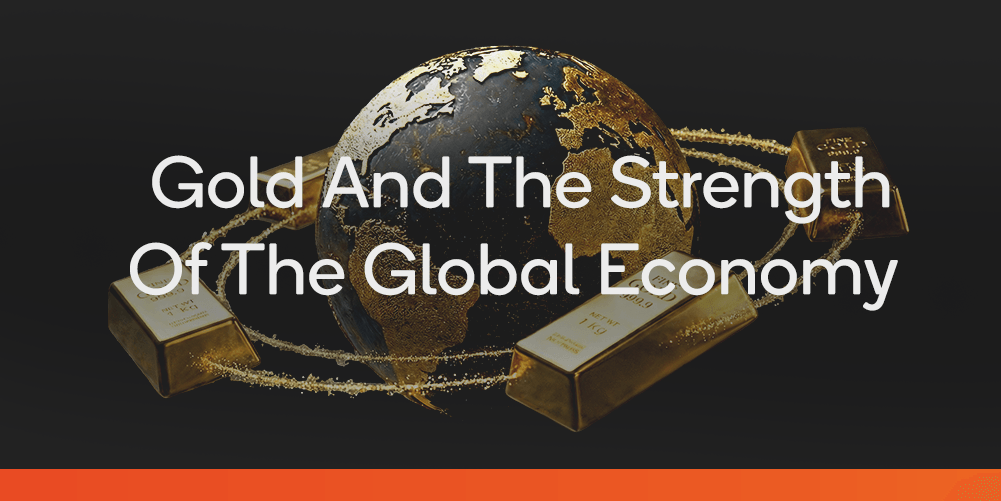
The importance of gold in the global economy increases as political and economic developments accelerate across different countries around the world. Throughout history, gold has proven its ability to preserve its economic and financial value over long periods of time, remaining one of the most stable and trusted assets.
Its value is not limited to being a precious metal; rather, its true significance lies in its role as a safe investment asset that does not lose value and often increases over time. In addition, gold represents a strategic store of security that countries rely on to protect their economies.
Gold is considered one of the most prominent metals with economic value worldwide, and its importance is highlighted through several key aspects, including:
- A secure monetary reserve
Many countries rely on gold as a guaranteed-value monetary reserve due to its independence from other assets such as stocks and bonds, making it an effective tool for maintaining the stability of financial reserves. - A safe haven during times of crisis
During periods of wars, economic crises, or global conflicts, individuals and governments turn to gold as a store of value that helps support currency stability and financial systems. - Its impact on currency movements
Gold prices are closely linked to currency movements, particularly the US dollar. Gold tends to decline when the dollar strengthens and rise when the dollar weakens. Therefore, gold is considered an important means of protecting assets from sharp fluctuations in global markets. - Its role in various industries
Gold is widely used in the manufacturing of jewelry, in addition to its unique properties that make it an essential element in electronic and medical industries. - A trading instrument in financial markets
Gold is one of the most prominent trading and speculative instruments in global financial markets, whether through futures contracts or exchange-traded funds, making it a core component of investment portfolios. - Protection against inflation
Central banks hold large quantities of gold as a hedge against inflation and rising prices, and to protect the value of currencies in the event of disturbances or sudden changes in the global economy.
Why Does Gold Hold Such Value?
Gold has retained its value throughout the ages not by coincidence, but as a result of a combination of factors that have made it one of the most reliable and enduring assets in economic history. The reasons behind its value can be summarized as follows:
- Gold is a rare metal
Gold is considered a rare metal, as it is not easily found or extracted. Its extraction requires significant effort and costly resources, which gives it a higher value compared to other metals that are more abundantly available. - A historical medium of exchange
Gold has been used as a medium of exchange for thousands of years and served as the foundation for trade and financial contracts across different civilizations. Even today, gold remains an important financial reserve relied upon by most countries within their economic systems. - A metal unaffected by time
Gold possesses unique characteristics that allow it to maintain its value over time. It is a durable metal that does not corrode or oxidize, nor does it lose its luster or physical properties regardless of how much time passes. - Investment and aesthetic value
Gold plays a prominent investment role, especially during periods of economic crises and rising inflation, as investors turn to it to preserve the value of their portfolios. In addition, gold holds high aesthetic value in the jewelry industry and is regarded as a symbol of wealth and financial stability across cultures. - Gold generates solid returns
Gold is characterized by its ability to deliver satisfactory returns to investors over time. It is also considered one of the most easily tradable assets due to its high liquidity within global financial markets.
Does Gold Determine the Value of a Currency?
Throughout history, gold has been closely linked to the value of many currencies through what was known as the gold standard, under which currencies were traded against a specific quantity of gold. This system contributed to maintaining currency stability and strengthening confidence in economic and financial systems during those periods.
With the development of modern economic systems, most countries shifted toward adopting fiat currencies that are no longer directly linked to gold. As a result, the value of currencies today is influenced by multiple economic factors, most notably inflation rates, interest rates, national economic performance, as well as supply and demand forces in the markets.
Despite the abandonment of the gold standard in its direct form, gold continues to play a central role in the global financial system. Central banks rely on it as a hedging tool against economic volatility and financial crises.
Accordingly, it can be said that gold no longer directly determines the value of a currency; however, it still influences it indirectly through its role as a benchmark of trust and a means of preserving monetary stability.
Comparing Gold and Bitcoin as Safe Havens
With the evolution of financial markets and the emergence of digital assets, Bitcoin has emerged as a new investment option often compared to gold, particularly in terms of their roles as safe havens during periods of volatility. However, reality shows that despite its growing adoption, Bitcoin has not yet been able to surpass gold in terms of long-term stability and trust.
Gold
Gold is globally recognized as a safe haven asset and has a long history of preserving value through various economic and political crises. It has repeatedly proven its resilience during periods of instability, making it the primary choice for hedging and wealth protection.
Bitcoin
In contrast, Bitcoin is considered an emerging investment asset closely linked to technology and the digital economy. Despite its appeal to some investors, its sharp volatility and regulatory uncertainty make its value less stable. Moreover, it has not yet achieved the same level of trust that gold enjoys over the long term.
Major Gold Trading Markets Worldwide
Gold markets are among the most active financial markets globally, where gold futures contracts and options are traded extensively in major financial centers. This reflects the high level of liquidity and strong confidence in this precious metal.
Among the most prominent global gold trading centers are:
- London Metal Exchange (LME)
The average daily trading volume is approximately $20 billion, making it one of the oldest and most important organized markets for metal trading. - New York Mercantile Exchange (COMEX)
The average daily trading volume reaches around $30 billion, and it serves as a key global benchmark for gold pricing. - Dubai Gold Market
One of the largest gold trading hubs in the region, with an average daily trading volume of approximately $70 billion, benefiting from its strategic location between East and West.
In light of the ongoing fluctuations in the global economy, gold remains one of the most stable and trusted assets over time. From its historical role in supporting currencies to its current status as a safe haven and a hedging tool against crises and inflation, gold has proven that it is not merely a precious metal, but a fundamental pillar in maintaining financial system stability and protecting wealth.
Despite the emergence of modern investment instruments and the development of digital markets, gold continues to be a strategic choice for both investors and governments alike, due to its intrinsic value and long-term sustainability. Therefore, understanding the role of gold in the global economy and making informed investment decisions based on a balance between security and opportunity remains essential.